
A first of its kind: GRIP graduation at a women’s prison makes history in the Central Valley
April 25, 2025
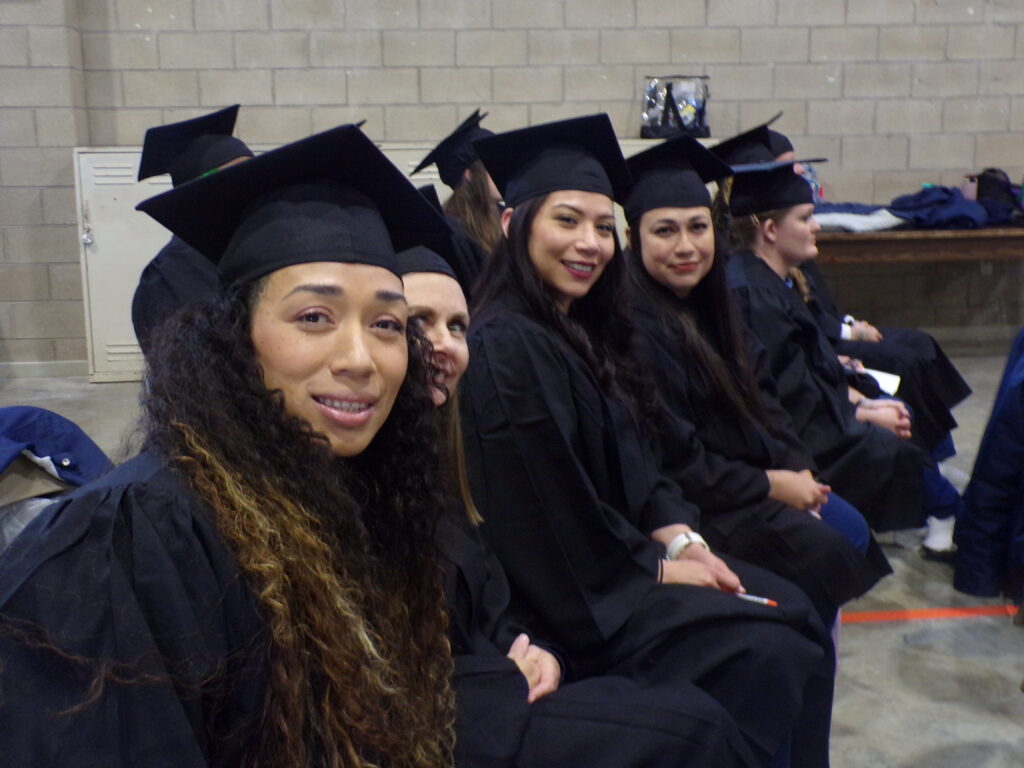
History was quietly and powerfully made at the Central California Women’s Facility (CCWF) when a group of incarcerated women became the first to graduate from the Guiding Rage Into Power (GRIP) program at this prison. The ceremony, held on January 25, 2025, marked a milestone that was emotional, profound, and deeply rooted in healing.
They are Tribe 612—a name that represents the 612 years this group of graduates and their formerly incarcerated facilitators have collectively spent incarcerated. But their story is not one of time lost. It’s a story of reclamation, healing, and radical accountability.
A digital celebration with loved ones
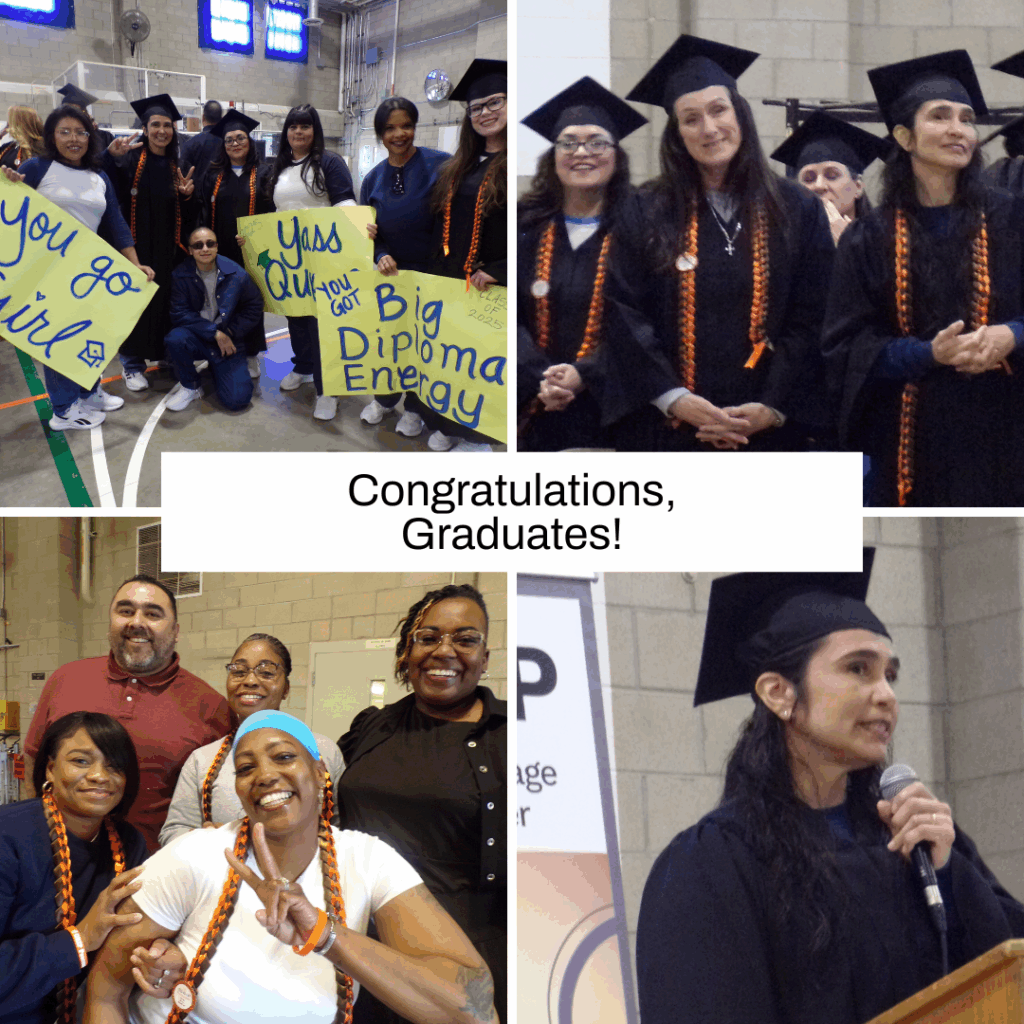
A livestream brought families and loved ones into the room. Graduates stood beaming at the large screen TV before and after the ceremony, waving to their family and friends through tears and laughter. The women’s “chosen families”—fellow CCWF residents invited by graduates—showed up in force, clapping and cheering with unmistakable pride.
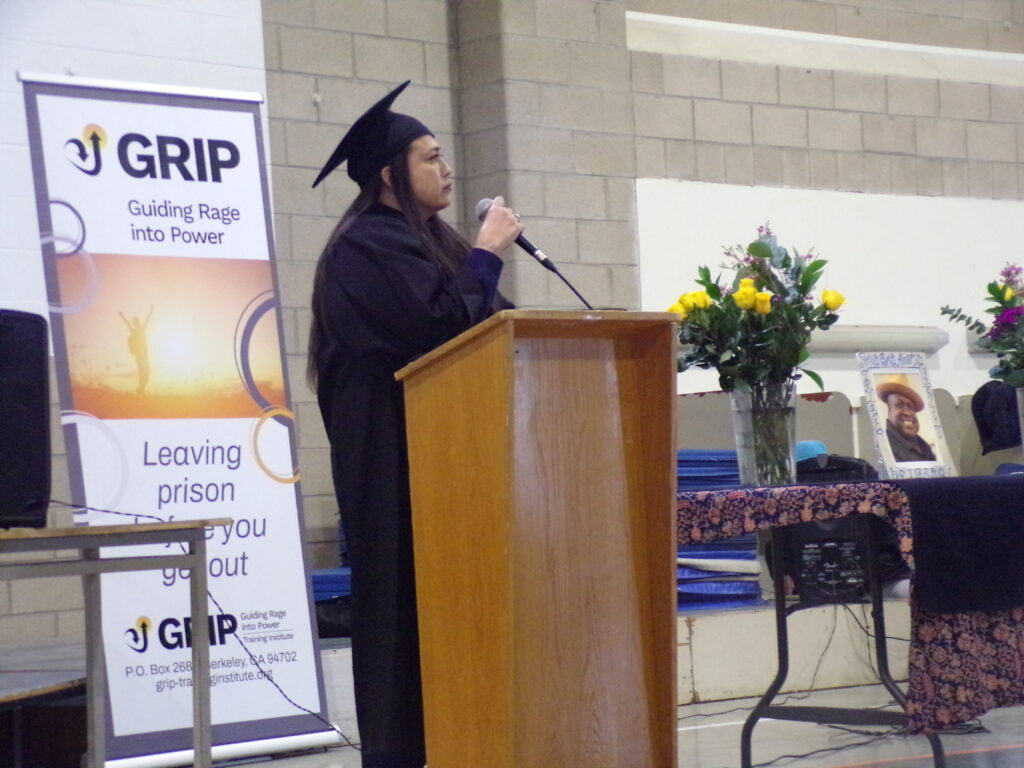
The ceremony was emceed by Andres Rodriguez, GRIP’s Regional Program Manager for the Central Valley and the incoming Prison Lead for CCWF. The tribe’s outside facilitators Brandy Davis, Javier Quintero, and Tree Moses proudly honored each graduate with a certificate of completion and honor cord.
Everyone carried with them the memory of Bernard Moss, Peacemaker and beloved facilitator who passed away several months into the cohort’s year-long journey. Many of the graduates looked on Bernard as the father figure they never had as his very presence emanated authenticity, compassion, and understanding.
Finding voice, reclaiming power
Many graduates spoke about how GRIP helped them discover their voices and rewrite long-held beliefs about themselves.
“Six months ago, I wouldn’t have been able to stand here,” one graduate shared. “GRIP helped me take full ownership of my choices. We cried. We grew. We let go of victimhood.”
Participants spoke openly about the emotional challenges of the work—unpacking trauma, confronting harmful patterns, and learning how to respond rather than react. As one woman put it, “I didn’t know how to manage my emotions before. Now I stop, breathe, and observe. That’s how I keep my power.”
Becoming Peacemakers
Candice Ortega, one of the graduates selected to serve as an inside facilitator for the next cohort, reflected on the power and responsibility of becoming a Peacemaker.
“We had to face our demons and let the poison slowly seep out,” she said. “GRIP taught me to stop taking everything personal. To sit in the fire. To respond instead of react.”
For many women, GRIP marked the first time they’d experienced this kind of deep, sustained self-work. “No, I don’t want to be better,” Candice added. “I want to be my authentic self. And I think I’m amazing!” (The room erupted in applause.)
Radical responsibility, deep healing
Graduate Carmona invoked a concept that resonated with many: amor fati—the love of one’s fate. “It’s about learning to embrace even the painful parts of our past,” she said. “That’s radical responsibility. That’s recovery.”
Others echoed the healing power of facing trauma head-on. Bree, a graduate, shared that GRIP helped her “open up, be vulnerable, and handle situations differently.” Another participant described the emotional depth of the process as “putting on scuba gear and going all the way underwater.”
Poetry, tears, and truth
Poetry added emotional weight to the day. Bree shared original work that touched on injustice and systemic neglect:
So few give a damn
The stomachs that swell
The bodies that fade
The ones without food
For so many days…
They’re killing these kids
It’s so hard to swallow.
The path has been paved
So many will follow…
Her voice—and the silence that followed—captured the room.
A new chapter of leadership
Many graduates are stepping forward to lead the next generation of Peacemakers. “This was like nothing I’ve ever experienced,” said Erica, a GRIP graduate incarcerated for 23 years. “It lit a fire under me. Now I’m training to be a substance abuse counselor. The work doesn’t stop here.”
Nine members of Tribe 612 were selected to be inside GRIP facilitators for the next tribe. When Andres, Tree, and Javier held an orientation session at CCWF, over 400 women applied for the program. The new cohort, Tribe 759, began earlier this month, and many students said, “We’ve never been received like this before.”
The graduation ended not in silence, but in song and movement. Women danced with each other, with their facilitators and guests, and with a newfound sense of inner freedom. It was more than a ceremony. It was a homecoming. A turning point. A collective decision to live differently—and to lead others toward healing.